
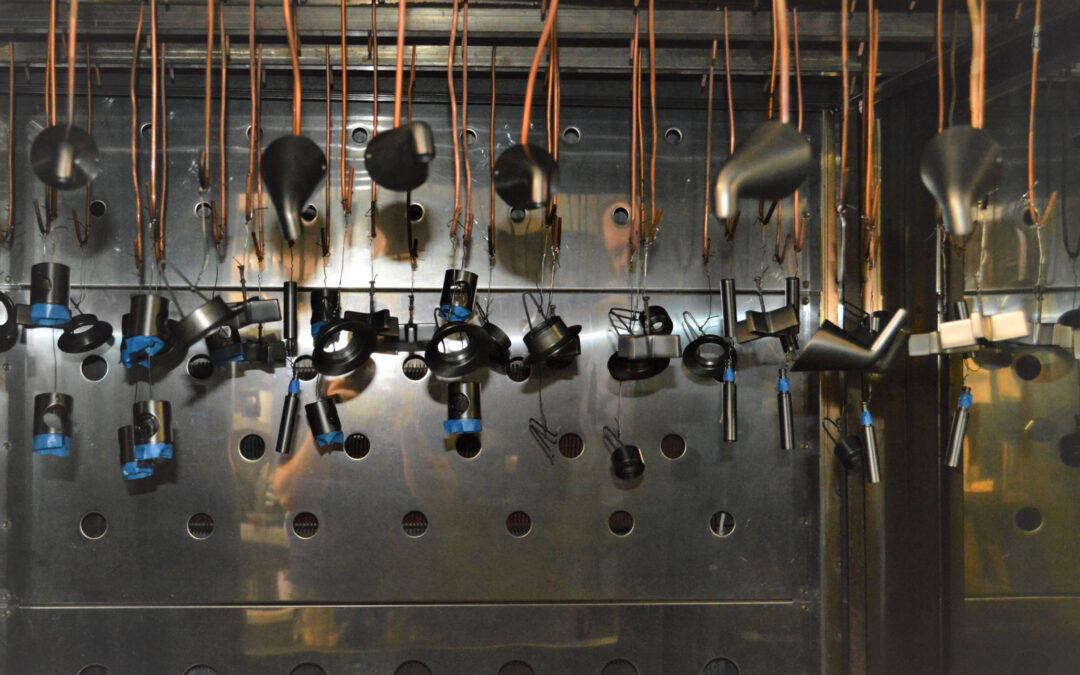
Ever wonder how your jewelry stays shiny, your car bumpers resist rust, or your bathroom fixtures keep their chrome finish? The answer lies in the electroplating process—a controlled chemical method that bonds a thin layer of metal onto another surface.
Whether you’re researching decorative finishes or industrial coating solutions, understanding how electroplating works can help you choose the right plating partner and achieve the results you need.
What Is Electroplating and Why Does It Matter?
Electroplating is an electrochemical process that deposits a metal coating onto a conductive surface. By passing an electric current through a specialized chemical bath, metal ions bond to the object being plated.
This process serves multiple purposes. It enhances appearance, improves corrosion resistance, increases wear durability, and can even restore worn parts to their original dimensions. Industries from automotive to aerospace rely on the electroplating process for both function and aesthetics.
The 5 Key Steps in the Electroplating Process
Understanding the metal electroplating steps helps you appreciate the precision required to achieve a high-quality finish.
- Surface Preparation and Cleaning
Before any plating begins, the base metal must be completely clean. Oils, dirt, oxidation, and other contaminants prevent proper adhesion. This step typically involves degreasing, alkaline cleaning, and acid etching to create a microscopically clean surface.
- Pre-Treatment and Activation
Once cleaned, the part undergoes pre-treatment to activate the surface. This may include applying a strike layer—a very thin initial coating that helps the primary plating layer bond properly. For difficult metals like stainless steel or aluminum, special activation processes ensure compatibility.
- Electroplating Bath Immersion
The prepared part is submerged in an electrolyte solution containing dissolved metal salts. An electric current flows between the part (cathode) and a metal anode. Metal ions from the solution migrate to the part’s surface, forming a uniform coating atom by atom.
Temperature, current density, bath chemistry, and immersion time all affect the final thickness and quality of the plated layer.
- Rinsing and Neutralization
After plating, the part is rinsed thoroughly to remove residual chemicals. Multiple rinse stages ensure no plating solution remains, which could cause staining or corrosion. Neutralizing baths may also be used to stabilize the surface.
- Post-Treatment and Finishing
Depending on the application, post-treatment steps can include passivation, sealing, or polishing. Decorative electroplating often requires buffing to achieve a mirror-like finish. Industrial plating may include baking to relieve hydrogen embrittlement or applying topcoats for added protection.
Decorative vs. Industrial Plating: What’s the Difference?
Decorative electroplating focuses on appearance—think bright chrome, polished nickel, or antique brass finishes on lighting fixtures, furniture hardware, and architectural elements. The goal is visual appeal with adequate corrosion resistance.
Industrial plating process applications prioritize performance. Hard chrome for hydraulic cylinders, zinc plating for fasteners, and tin plating for electrical contacts all serve functional purposes. Thickness tolerances are tighter, and testing is more rigorous.
At PSP Plating, we handle both decorative and industrial electroplating with the same attention to detail. Learn more about our decorative plating services or explore our industrial coating capabilities.
Common Plating Metals and Their Uses
Different metals serve different purposes. Chrome offers hardness and shine. Nickel provides corrosion resistance and serves as an undercoat for chrome. Zinc protects steel from rust. Copper improves conductivity and acts as a base layer. Gold resists tarnish and conducts electricity.
Choosing the right metal depends on your application, environment, and budget. Our team can recommend the best solution based on your specific requirements.
Frequently Asked Questions
How long does the electroplating process take?
It depends on the part size, plating thickness, and metal type. Small decorative items may take 30 minutes to a few hours. Larger industrial parts requiring thick coatings can take several hours or even days when you include preparation and finishing steps.
Can any metal be electroplated?
Most conductive metals can be electroplated. Non-conductive materials like plastics can also be plated after a special activation process. However, the base metal’s composition affects how well the plating adheres, so proper preparation is essential.
How thick is an electroplated coating?
Decorative electroplating typically ranges from 0.0002 to 0.002 inches. Industrial hard chrome can be much thicker—up to 0.020 inches or more—depending on the application. Our team controls thickness precisely to meet your specifications.
Ready to Start Your Electroplating Project?
Whether you need decorative finishes that impress customers or industrial coatings that extend equipment life, PSP Plating delivers consistent, high-quality results.
We’ve been refining the electroplating process for years, and we’re ready to put that expertise to work for you. Contact us today to discuss your project, request a quote, or schedule a consultation with our plating specialists.
Recent Comments